
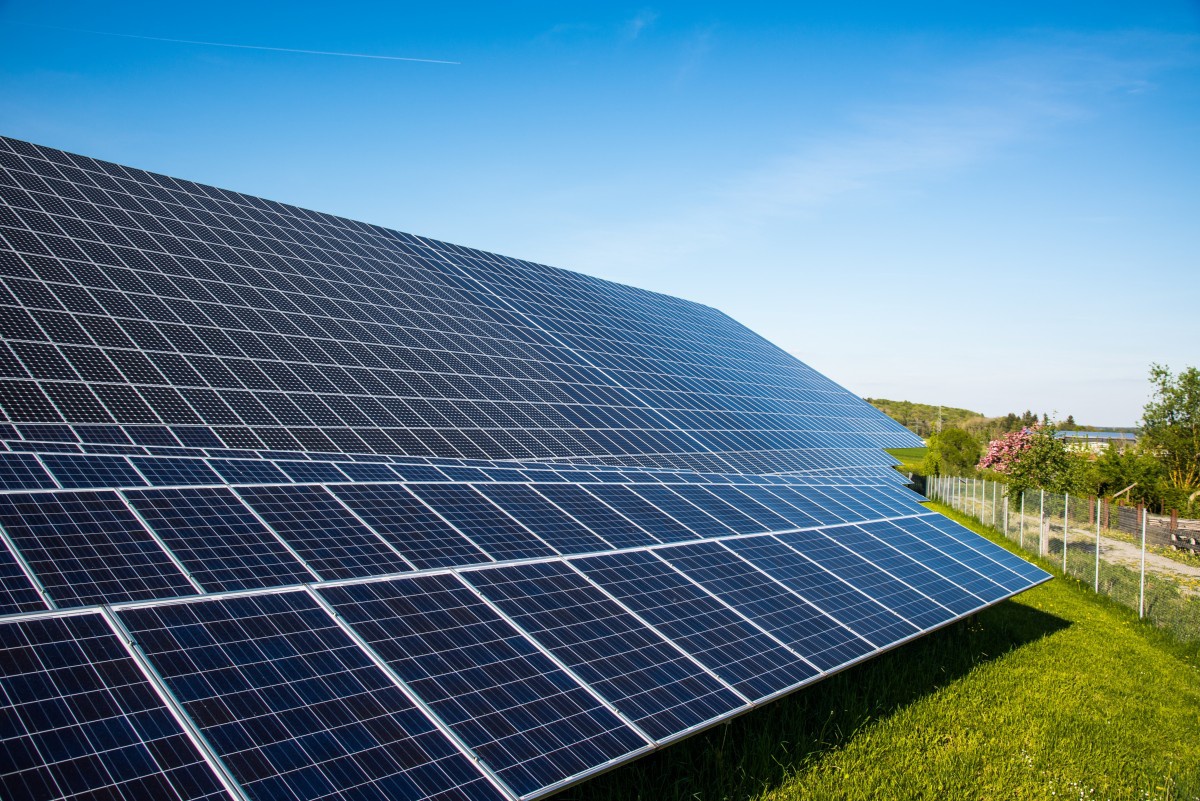
Tired of watching your electricity bills rise every month? Imagine your meter slowing down—or even spinning backward. Picture ending the season with a payment from your utility, not another bill.
This isn’t a dream. It’s real for Bangladeshi homeowners and businesses through the Net Metering Guidelines 2025.
As the nation pushes for 20% renewable energy by 2030, your rooftop can become a mini power plant—cutting costs and generating income.
Skip the policy jargon. Here’s what you need to know to turn your rooftop into revenue.
What Exactly is Net Metering?
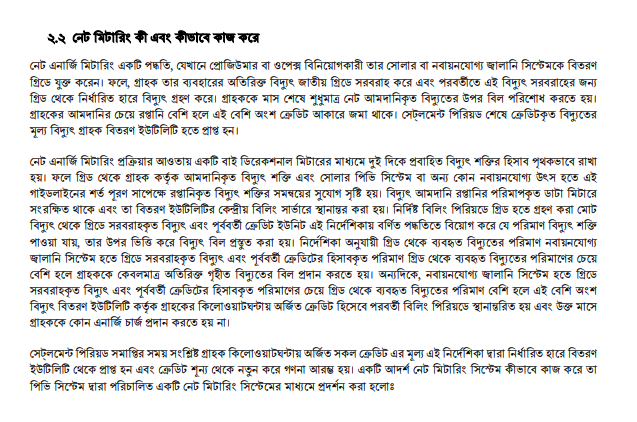
In simple terms, Net Metering is a billing mechanism that allows you to get credit for the electricity you add to the national grid.
Here’s how it works:
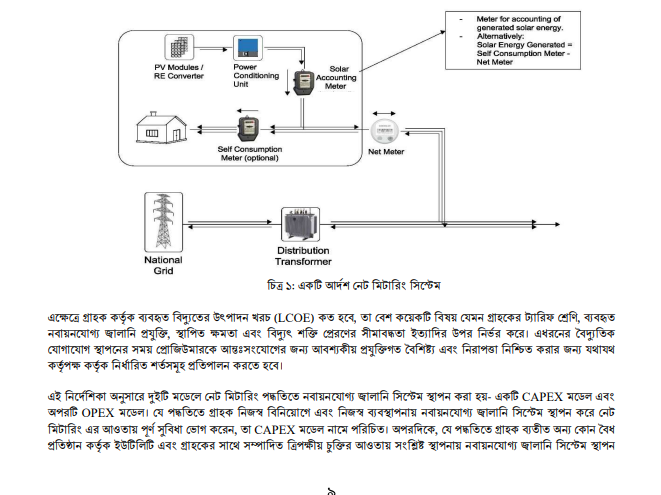
- Generate Power: You install a renewable energy system, like solar panels, on your property to produce electricity for your own use.
- Use What You Need: Your home or business runs on this clean, free energy during the day.
- Export the Surplus: If you produce more electricity than you consume, the excess power is automatically sent to the national distribution grid.
- Get Credited: Your electricity bill for the month is credited for the amount of power you supplied to the grid. You only pay for the “net” amount of electricity you drew from the grid.
This entire process is managed by a special bi-directional “Net Meter” that separately records the electricity you import from the grid and the electricity you export to it.
The Best Part: Rollover Credits and Cash Payments!
What happens if you export more electricity than you import in a month?
- Credit Rollover: The excess electricity is carried forward as a credit to your next month’s bill.
- Settlement Period: This system operates on a three-month “settlement period” that ends in March, June, September, and December. If, at the end of this period, you still have accumulated credits, your distribution utility will pay you for those units at a government-determined bulk tariff rate!
CAPEX vs. OPEX: Which Solar Investment Model is Right for You?
The guidelines offer two flexible models for setting up your renewable energy system.
1. The CAPEX (Capital Expenditure) Model
This is the straightforward ownership model.
- How it works: You invest your own funds to purchase and install the solar system.
- Who it’s for: Individuals or businesses who want to make a long-term investment and reap the full financial benefits of the system themselves.
2. The OPEX (Operational Expenditure) Model
This model is perfect if you want the benefits of solar without the upfront investment.
- How it works: A third-party investor company installs a solar system on your rooftop at their own cost. You then sign an agreement to buy the electricity generated by the system from them.
- Key Benefits:
- There is no investment risk for the electricity consumer.
- The OPEX investor handles all installation, operation, and maintenance.
- The tariff you pay the OPEX investor is typically lower than the retail tariff of your utility company, guaranteeing savings from day one.
- Agreement: This model requires a tripartite agreement between you (the consumer), the OPEX investor, and the distribution utility.
Are You Eligible for Net Metering?
You can apply for a net metering connection if you meet these key requirements:
- You must be a legitimate, active consumer of a distribution utility.
- You must have no outstanding electricity bills at the time of your application.
- The system must generate electricity from a renewable source (e.g., solar).
- You must either own the property or have formal permission from the owner to install the system.
- Even if you installed a rooftop solar system before these guidelines were introduced, you can apply to have your old system converted to the net metering framework.
The facility is available for a wide range of consumer categories across all voltage levels, including:
- Low Tension (LT): Residential, Irrigation, Small Industry, Commercial & Office, etc..
- Medium Tension (MT): Residential, Commercial, Industrial, etc..
- High Tension (HT): General Use, Commercial, Industrial.
- Extra-High Tension (EHT): All consumer categories.
How Big Can Your System Be?
The guidelines set clear limits on the capacity of your renewable energy system:
- The system’s AC capacity cannot be greater than your sanctioned load from the utility.
- For consumers connected at medium voltage (11kV) or higher, the system capacity cannot exceed 80% of the rated capacity of your transformer.
- Want to go bigger? If you wish to install a system larger than your sanctioned load, you can submit a special application. A committee will review the grid stability and the Power Division will make a final decision.
The Application Process: Step-by-Step
The government has streamlined the application process to be efficient and time-bound.
- Application Submission: You can apply either by submitting a hard copy or through the online portal (https://nem.powerdivision.gov.bd). If you’re opting for the OPEX model, you must first complete your agreement with the investor company before applying to the utility.
- Utility Approval: The distribution utility will review your application and issue an approval letter within 10 working days.
- System Installation: After getting approval, you have a maximum of 8 months to complete the installation of your system.
- Inspection & Testing: Once installed, you’ll submit a system checklist and request the utility to inspect and test the system to ensure it meets all technical standards.
- Final Agreement & Connection: After a successful inspection, you will sign the final Net Metering Agreement with the utility within 15 working days. This signing date marks your Commercial Operation Date (COD), and from this day, your net metering journey begins!
Frequently Asked Questions (FAQ)
What is Net Metering in Bangladesh?
Net Metering is a system that lets you export extra solar power to the grid and get paid or earn credit. After a 10% maintenance deduction, 90% of your exported energy is credited.
Unused credit is later bought by the utility at the BERC bulk generation rate, helping reduce or even eliminate your electricity bill.
How is the bill calculated if I export more than I import?
Net Metering is a system that lets you export extra solar power to the grid and get paid or earn credit. After a 10% maintenance deduction, 90% of your exported energy is credited.
Unused credit is later bought by the utility at the BERC bulk generation rate, helping reduce or even eliminate your electricity bill.
What happens to my credits at the end of a settlement period?
At the end of each three-month settlement period (March, June, September, December), if you have a positive credit balance, the utility will pay you for it. The payment can be made via bank transfer (BEFTN/NPSB), mobile banking (Nagad/bKash/Rocket), or cheque, based on the preference you state in your application.
What if I have a pre-paid/smart meter?
The guidelines include provisions for implementing net metering with pre-payment and smart meters. The system will first use your accumulated credit units before deducting money from your prepaid balance.
What technical standards do the equipment like solar panels and inverters need to meet?
All equipment, including solar modules and inverters, must be approved by the Sustainable and Renewable Energy Development Authority (SREDA) and meet specific Bangladesh Standards (BDS) and equivalent IEC standards to ensure safety and quality.
Who pays for the new bi-directional net meter?
The applicant (the consumer or the OPEX investor) is responsible for the cost of the net meter and any other related installation expenses.
By embracing rooftop solar through the Net Metering guidelines, you are not just making a smart financial decision but also contributing to a cleaner, greener, and more sustainable Bangladesh. Check with your local distribution utility (like BPDB, BREB, DESCO, DPDC, WZPDCL, or NESCO) to start your journey today!
Leave a Reply